^
Top
Org. Synth. 2021, 98, 463-490
DOI: 10.15227/orgsyn.098.0463
Large-Scale Preparation of Oppolzer's Glycylsultam
Submitted by Upendra Rathnayake, H. Ümit Kaniskan, Jieyu Hu, Christopher G. Parker, and Philip Garner*,†1
Checked by Bogdan R. Brutiu, Martina Drescher, Daniel Kaiser and Nuno Maulide
1. Procedure (Note 1)
A. Bromoacetylsultam 2. To a 3 L three-necked, round-bottomed flask (24/40 joints) equipped with a 6.5 cm egg-shaped Teflon-coated magnetic stir bar, 60 mL graduated pressure-equalizing dropping funnel (Note 2), fitted with an argon inlet (Note 3) and a rubber septum are added (2S)-bornane-2,10-sultam (1) (30.0 g, 0.139 mol, 1.00 equiv) (Note 4) and dry THF (800 mL) (Note 5). The reaction mixture is stirred until 1 is completely dissolved and the resulting solution is cooled in a -78 °C dry ice-acetone bath for 45 min. At this point, 1.6 m n-butyllithium in hexanes (97.0 mL, 0.155 mol, 1.12 equiv) (Notes 6 and 7) is transferred by cannula into the pressure-equalizing dropping funnel and then added dropwise over 30 min to the stirring (340 rpm) reaction mixture at -78 ℃ (Note 8) (Figure 1). The resulting solution is stirred at -78 ℃ for an additional 1 h.
v98p0463-2.jpg
Figure 1. Reaction set-up for the addition of n-butyllithium to the sultam solution (photo provided by submitter)

To a 500 mL single-necked round-bottomed flask fitted with a rubber septum, equipped with an argon inlet and charged with dry THF (150 mL) is added bromoacetyl bromide (13.6 mL, 31.5 g, 0.156 mol, 1.12 equiv) (Note 9) via a syringe in one portion. This solution is added to the sultam lithium salt mixture at -78 ℃ via cannula over 1.5 h, during which time the solution turned yellow (Figure 2).
v98p0463-3.jpg
Figure 2. Reaction set-up for the addition of bromoacetyl bromide to the sultam lithium salt mixture (photo provided by submitter)

The resulting mixture is further stirred (180 rpm) for 2 h at -78 ℃. Analysis by TLC shows complete consumption of sultam 1 (Note 10). The dry ice-acetone bath is removed, and the reaction mixture is diluted with water (500 mL) (Note 11) over 10 min and brought to 23-25 °C over 30 min. Approximately, half of the reaction mixture is transferred to a 2 L separatory funnel, and the aqueous phase is separated and extracted with diethyl ether (3 x 500 mL) (Note 12). Then the process is repeated with the remaining half of the reaction mixture. The combined organic layers are dried over 300 g of anhydrous Na2SO4 (Note 13), decanted and concentrated by rotary evaporation (35 ℃, starting with 50 mmHg and gradually lowering to 10 mmHg). The product is further dried under high vacuum at 0.1 mmHg to afford crude 2 (51.4 g, 86%, 78% purity by qNMR) as an amber colored solid (Notes 14, 15, 16, and 17) (Figure 3).
B. Azidoacetylsultam 3. To a 1 L three-necked, round-bottomed flask (24/40 joint) equipped with a 6.5 cm egg-shaped Teflon-coated magnetic stir bar, fitted with an argon inlet and a rubber septum are added crude 2 (51.4 g, 78% purity, 0.119 mol, 1.00 equiv) (Note 18) and reagent grade DMF (350 mL) (Note 19). To this reaction mixture, NaN3 (9.98 g, 0.154 mol, 1.29 equiv) (Notes 20 and 21) is added in one portion and stirred for 8 h at 23-25 °C under argon (Figure 4).
v98p0463-4.jpg
Figure 3. Crude bromoacetylsultam 2 (photo provided by submitter)

v98p0463-5.jpg
Figure 4. Reaction mixture after the addition NaN3 (photo provided by submitter)

During the course of the reaction the color of the solution turns dark-brown. The progress of the reaction is monitored by 1H NMR (Note 22). Once the starting material 2 completely disappears, the reaction is diluted with water (150 mL) and transferred to a 2 L separatory funnel, and the aqueous phase is extracted with diethyl ether-hexanes (1:1, v/v) (4 x 500 mL). Approximately half of the combined organic layers is transferred to a 2 L separatory funnel and washed with water (2 x 350 mL). The washing process is repeated with the remaining half of the combined organic layers. The organic layers are recombined and dried over anhydrous Na2SO4 (300 g), filtered over cotton, and concentrated by rotary evaporation (35 ℃, 10 mmHg). The product is further dried under high vacuum (0.1 mmHg) to afford crude 3 (35.2 g, 83%, 84% purity by qNMR) as a pale-yellow solid (Notes 23, 24, 25, and 26) (Figure 5).
v98p0463-6.jpg
Figure 5. Crude azidoacetylsultam 3 (photo provided by submitter)

C. Glycylsultam 4. To a 2 L three-necked, round-bottomed flask (24/40 joint) equipped with a 6.5 cm egg shaped Teflon-coated magnetic stir bar, fitted with rubber septa and a three-way glass adaptor (24/40) connected to an argon inlet and a vacuum inlet (130 mm Hg, Note 27) are added crude 3 (35.2 g, 84% purity, 0.099 mol, 1.00 equiv) (Notes 28 and 29) and HPLC grade MeOH (800 mL) (Note 30). To this reaction mixture, conc. HCl (12.1 M, 20.1 mL, 0.243 mol, 2.43 equiv) (Note 31) is added at 23-25 °C over 5 min. The argon flow sweeping through the round-bottomed flask is increased and a slurry consisting of 10 wt.% Pd-C (2.50 g) (Note 32) in water (25 mL) (Note 33) prepared in a 50 mL beaker is added to the reaction mixture over 15 min. Any remaining 10 wt.% Pd-C in the beaker and in the round-bottomed flask wall is rinsed down and added to the reaction mixture with another portion of water (5-10 mL). The third neck is capped with a septum and the suspension is stirred under argon. While the stirring is maintained the flask is evacuated by switching to the vacuum (130 mmHg) just until the solvent starts to bubble, then back-filled with argon. This vacuum-refilling cycle is repeated three times.
Then the argon-vacuum adaptor is replaced with a three-way glass adaptor (24/40 joint) fitted with a hydrogen balloon and a vacuum inlet (130 mmHg). The stirring reaction flask is evacuated, while keeping the balloon closed off, until the solvent starts to bubble, and then back-filled with hydrogen by closing the vacuum and opening the balloon to the flask. This process is repeated four times. The reaction mixture is stirred under hydrogen for another 24 h (Figure 6), during which period the hydrogen balloon is refilled every 6 h and the flask is subjected to a cycle of vacuum evacuation and backfilling with hydrogen (Note 34).
v98p0463-7.jpg
Figure 6. Reaction set-up for the hydrogenolysis of azidoacetylsultam 3 (photo provided by submitter)

After 24 h, the adaptor with the hydrogen balloon is replaced with the argon-vacuum adaptor. Hydrogen is removed under vacuum and backfilled with argon, repeating the cycle three times. Then another portion of slurry consisting of 10 wt.% Pd-C (2.50 g) in water (25 mL) is added (Note 35) over 15 min following the procedure explained above. The reaction setup is assembled for the hydrogenolysis reaction as previously described, and the reaction was placed under a hydrogen atmosphere for another 12 h, at which point TLC analysis showed complete consumption of the starting material (Note 36). The hydrogen balloon is removed, and the crude reaction mixture is filtered under vacuum (130 mmHg), through a pad of Celite (150 g) (Note 37) packed into a Büchner funnel (outer diameter = 10.5 cm, height = 5 cm), always taking care to maintain the solvent level above the Celite bed (Note 38). Then the Celite is washed with methanol (800 mL), and the organic layer is concentrated by rotary evaporation (35 ℃, 10 mmHg). The product is subjected to high vacuum (0.1 mmHg) until it reaches a constant weight (Note 39) to afford crude 5 (38.8 g) as a colorless solid (Figure 7a) (Notes 40 and 41).
The crude ammonium salt 5 (2.50 g, Note 42) is dissolved in H2O (125 mL) and transferred to a 1 L separatory funnel, and the aqueous phase is extracted with CH2Cl2 (125 mL) to remove any neutral material. The aqueous phase is transferred to a 500 mL round-bottomed flask that contains a stir bar, chilled to 0 ℃ in an ice-water bath and neutralized by adding NaHCO3 (sat. aq.) in 5-10 drop increments via a pasture pipette while gently stirring (80 rpm). The pH is monitored after each series of addition using pH paper (Note 43). Once the pH reaches 7.2-7.4, the solution is transferred to a 1 L separatory funnel, and the aqueous phase is extracted with CH2Cl2 (3 x 250 mL). The organic layers are combined and dried over anhydrous Na2SO4 (200 g), decanted, and concentrated by rotary evaporation (starting with 50 mmHg and gradually lowering to 10 mmHg), while maintaining the water bath temperature at 17 ℃ until the final volume reaches approximately 1-2 mL. The remaining solvent is removed by rotary evaporation at 50 mmHg, leading to rapid precipitation of the amine (Note 44). The product is subjected to high vacuum (0.1 mmHg) to afford glycylsultam 4 (1.49 g, 84%, 98% purity) as a colorless solid (Figure 7b) (Notes 45, 46 and 47).
v98p0463-8.jpg
Figure 7. (a) Glycylsultam ammonium chloride 5, (b) Glycylsultam 4 (photo provided by submitter)

2. Notes
1. Prior to performing each reaction, a thorough hazard analysis and risk assessment should be carried out with regard to each chemical substance and experimental operation on the scale planned and in the context of the laboratory where the procedures will be carried out. Guidelines for carrying out risk assessments and for analyzing the hazards associated with chemicals can be found in references such as Chapter 4 of "Prudent Practices in the Laboratory" (The National Academies Press, Washington, D.C., 2011; the full text can be accessed free of charge at https://www.nap.edu/catalog/12654/prudent-practices-in-the-laboratory-handling-and-management-of-chemical. See also "Identifying and Evaluating Hazards in Research Laboratories" (American Chemical Society, 2015) which is available via the associated website "Hazard Assessment in Research Laboratories" at https://www.acs.org/content/acs/en/about/governance/committees/chemicalsafety/hazard-assessment.html. In the case of this procedure, the risk assessment should include (but not necessarily be limited to) an evaluation of the potential hazards associated with (2S)-bornane-2,10-sultam, tetrahydrofuran, 1.6 M n-Butyllithium, hexanes, bromoacetyl bromide, diethyl ether, sodium sulfate, N,N-dimethylformamide, sodium azide, methanol, conc. HCI, 10 wt.% palladium on carbon, sodium bicarbonate and dichloromethane as well as the proper procedures for handling, addition, cannulation and quenching of highly reactive n-butyllithium and bromoacetyl bromide, handling and addition of potentially explosive sodium azide and hydrogenolysis reaction using palladium on carbon.
2. A 100 mL dropping funnel would be ideal for the experiment since it reduces the measuring error caused by filling n-butyllithium two times to make up the required volume.
3. The reaction is very sensitive to moisture and air. Hence, it was carried out with extreme care, under an inert (argon) environment. All the joints in the experimental setup were sealed using parafilm tape.
4. (2S)-Bornane-2,10-sultam (98%) was purchased from AK scientific and used as received. The checkers purchased this compound from Fluorochem.
5. Tetrahydrofuran (certified ACS grade) was purchased from Fisher Scientific and was distilled from Na/benzophenone under argon. The reaction is very sensitive to water, therefore care was taken to use dry solvents. The checkers purchased anhydrous THF from TCI.
6. 1.6 M n-butyllithium in hexanes was purchased from Sigma-Aldrich and used as received.
7. Weight of the 1.6 M n-butyllithium used is given based on the n-butyllithium moles.
v98p0463-9.gif
8. After complete addition of n-butyllithium in hexanes, the pressure-equalizing dropping funnel can be quickly replaced with a rubber septum at an increased argon flow.
9. Bromoacetyl bromide (≥98%) was purchased from Sigma-Aldrich and used as received.
10. The reaction was monitored by TLC using silica gel HL TLC plates, purchased from Sorbent Technologies, Inc. The plate was developed using (3:1, v/v) hexanes-ethyl acetate as the mobile phase and visualized using cerium ammonium molybdate stain (Figure 8). The starting material forms a deep-blue colored spot and the product forms a gray-blue colored spot on the TLC upon heating with the stain. The Rf value of the starting material 1 was 0.26 and the Rf of the product 2 was 0.41.
v98p0463-10.jpg
Figure 8. TLC analysis of the reaction mixture at 2 h, after addition of bromoacetyl bromide (photo provided by submitter)

11. Addition of water was done slowly and while the reaction mixture was chilled. Even though water can react vigorously with the small amount of excess bromoacetyl bromide and/or n-butyllithium remaining in the reaction mixture, such was not observed during the dilution.
12. Diethyl ether, anhydrous (BHT stabilized, certified ACS grade) was purchased from Fisher Scientific and used as received.
13. Sodium sulphate, anhydrous was purchased from MilliporeSigma and used as received.
14. The crude product is of sufficient purity for use in Step B, therefore purification is not required at this stage. The presence of a small amount of bromoacetic acid was occasionally observed in the product by 1H NMR and/or a crude weight is occasionally determined to be greater than the theoretical value. If this is the case, partitioning the crude material between NaHCO3 (sat. aq.) (100 mL) and diethyl ether (500 mL) can address those issues. In fact, this route to synthesize Oppolzer's glycylsultam does not require any chromatographic or crystallization purification apart from a simple organic wash after the hydrogenolysis at the final step. Hence crude 2 was taken directly to the next step.
15. Characterization data for the crude product 2 (data provided by checkers): 1H NMR pdf (400 MHz, CDCl3) δ: 4.32 (d, J = 13.1 Hz, 1H), 4.19 (d, J = 13.1 Hz, 1H), 3.90 (dd, J = 7.6, 5.1 Hz, 1H), 3.49 (app q, J = 13.8 Hz, 2H), 2.19-2. 02 (m, 2H), 2.00-1.82 (m, 3H), 1.53-1.31 (m, 2H), 1.14 (s, 3H), 0.97 (s, 3H); 13C NMR pdf (101 MHz, CDCl3) δ: 164.6, 65.6, 52.8, 49.1, 48.0, 44.6, 38.0, 32.9, 27.6, 26.5, 20.8, 20.0; IR (neat): 2989, 2959, 2884, 2360, 2341, 2256, 1696, 1616, 1541, 1507, 1481, 1456, 1435, 1411, 1395, 1373, 1327, 1313, 1301, 1258, 1232, 1205, 1167, 1152, 1132, 1110, 1084, 1059, 1039, 987, 952, 939, 911, 888, 868, 843, 805, 774 cm-1; HRMS (ESI) calcd for C12H18NO3SBrNa [M + Na]: 358.0083. Found: 358.0092. Purity of the crude product (2) was assessed to be 78% based on qNMR pdf analysis using 1,3,5-trimethoxybenzene as an internal standard. The checkers performed a second run on half scale, yielding 23.7 g (89% yield, 88% purity). The submitters reported the following result on a full scale reaction: 47.7 g, 82% yield, 81% purity.
16. The major impurity present in crude 2 is the unreacted camphor sultam 1 (Figure 8), which is completely inert towards ancillary transformations. But if further purification is required, flash chromatography can be performed to obtain pure 2 as follows: Silica gel 60 Å was purchased from Sorbent Technologies, Inc. The flash column (dimensions: 13 mm inner diameter, 203 mm in height) is wet packed with silica gel (15 g; 150 mm, height of the silica bed in the column) using a solution of (4:1, v/v) hexanes-ethyl acetate. Crude bromoacetylsultam 2 (59 mg, dissolved in 1 mL of methylene chloride) is wet loaded onto the packed silica column. The column is eluted with 100 mL of (4:1, v/v) hexanes-ethyl acetate and then continued with 200 mL of (3:1, v/v) hexanes-ethyl acetate until the product completely elutes off the column (Figure 9). The fraction collection is begun (5-mL fractions) immediately after starting the solvent elution and each fraction is analyzed by TLC to find the product (Figure 9). The plate was developed using (3:1, v/v) hexanes-ethyl acetate as the mobile phase and visualized using cerium ammonium molybdate stain followed by heating. Column fractions 7-9 were combined and concentrated by rotary evaporation (35 ℃, started with 50 mmHg and gradually lowered to 10 mmHg) and then at 0.1 mmHg to afford purified 2 (49.5 mg).
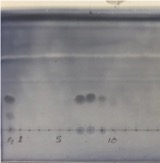
v98p0463-11.jpg
Figure 9. TLC analysis of the column chromatography fractions of 2 (photo provided by submitter)

17. Pure bromoacetylsultam 2 has the following characteristics (data provided by submitters): mp 105-107 ℃; 1H NMR (500 MHz, CDCl3) δ: 4.34 (d, J = 12.8 Hz, 1H), 4.20 (d, J = 13.0 Hz, 1H), 3.91 (dd, J = 7.8, 5.0 Hz, 1H), 3.53 (d, J = 13.8 Hz, 1H), 3.46 (d, J = 13.9 Hz, 1H), 2.18-2.12 (m, 1H), 2.09 (dd, J = 14.0, 7.6 Hz, 1H), 1.96-1.87 (m, 3H), 1.47-1.40 (m, 1H), 1.39-1.32 (m, 1H), 1.16 (s, 3H), 0.98 (s, 3H); 13C NMR (126 MHz, CDCl3) δ: 164.7, 65.6, 52.9, 49.2, 48.0, 44.7, 38.1, 32.9, 27.7, 26.6, 20.9, 20.0; HRMS (ESI) m/z calcd for C12H19BrNO3S [M+H]+ 336.0269; found, 336.0282; IR (film): 3010, 2958, 2907, 2881, 1701, 1458, 1412, 1390, 1368, 1332, 1311, 1264, 1232, 1208, 1166, 1133, 1084, 1063, 1038, 988, 952, 939, 909, 889, 868, 804, 777, 745, 693, 632, 618, 563, 537, 529, 495, 456 cm-1.
18. The number of moles of bromoacetylsultam 2 in the crude is calculated based on the purity percentage from the quantitative NMR data.
v98p0463-12.gif
19. N,N-Dimethylformamide (certified ACS grade) was purchased from VWR analytical and used as received. The checkers purchased DMF from Acros.
20. Sodium azide (>99.0%) was purchased from TCI chemicals and used as received. The checkers purchased this compound from Sigma Aldrich.
21. Solid sodium azide was added to the reaction using a plastic spatula. Metal spatulas can react with sodium azide and produce explosive metal azides. Hence, care was taken to minimize the contact with metals.
22. The reaction is difficult to monitor using TLC (Figure 10). The starting material 2 and the product 3 have the same Rf value in the given solvent system. The TLC plate was developed using (3:1, v/v) hexanes-ethyl acetate mobile phase and visualized using ninhydrin stain. The Rf value of both 2 and 3 was 0.40. Despite having the same Rf value, the compounds stain differently when visualized using the ninhydrin stain. Starting material (2) forms a faint pink colored spot and the product (3) forms an orange-pink colored spot on the TLC upon heating.
v98p0463-13.jpg
Figure 10. TLC analysis of the starting material 2 and the product 3 (photo provided by submitter)

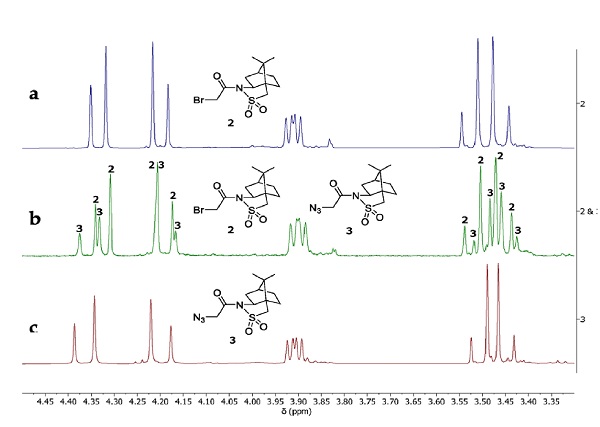
Hence, the reaction was monitored using 1H NMR. In most parts of the spectrum, the NMR chemical shifts of the starting material 2 and the product 3 are quite similar. Distinctive differences were mostly observed between the AB quartets in 4.50-3.30 ppm range, hence, these signals were used to monitor the progress of the reaction. The reaction usually goes to the completion within 5-6 h. To confirm the complete conversion, 1H NMR analysis was performed on the reaction mixture after 8 h, including NMR analysis of the reaction mixture that was spiked with the starting material (Figure 11). To prepare the NMR sample, approximately 0.3 mL of the reaction mixture was removed and partitioned between 0.5 mL of water and 0.5 mL of (1:1, v/v) diethyl ether-hexanes in a 4 mL vial. The organic phase was removed using a pasture pipette and concentrated under vacuum (10 mmHg). The NMR sample was prepared in CDCl3 and monitored using a Varian 400 MHz spectrometer.
v98p0463-14.jpg
Figure 11. NMR analysis of (a) starting material 2, (b) reaction mixture after 8 h, spiked with the starting material, (c) product 3 (provided by submitter)

23. Purification was not required at this stage and crude 3 was directly taken to the next step.
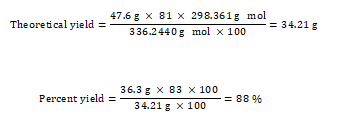
24. Characterization data for the crude product 3 (data provided by checkers): 1H NMR pdf (400 MHz, CDCl3) δ: 4.35 (d, J = 17.3 Hz, 1H), 4.18 (d, J = 17.3 Hz, 1H), 3.90 (dd, J = 7.7, 5.0 Hz, 1H), 3.50 (d, J = 14.1 Hz, 1H), 3.45 (d, J = 14.2 Hz, 1H), 2.32-2.14 (m, 1H), 2.10 (dd, J = 14.0, 7.9 Hz, 1H), 2.00-1.83 (m, 3H), 1.47-1.31 (m, 2H), 0.97 (s, 3H), 1.12 (s, 3H); 13C NMR pdf (101 MHz, CDCl3) δ: 166.7, 65.4, 52.8, 51.4, 49.4, 48.0, 44.7, 38.2, 32.9, 26.5, 20.8, 19.9; IR (film): 2961, 2359, 2337, 2160, 2109, 1992, 1703, 1541, 1458, 1415, 1376, 1332, 1269, 1238, 1220, 1167, 1137, 1117, 1066, 1040, 985, 941, 872, 808, 781 cm-1; HRMS (ESI) calcd for C12H18N4O3SNa [M + Na]: 321.0992. Found: 321.1001. The purity of the crude product 3 was assessed to be 84% based on qNMR pdf analysis using 1,3,5-trimethoxybenzene as an internal standard. The checkers performed a second run on half scale, yielding 17.7 g (92% yield, 96% purity). The submitters reported the following result: 36.3 g, 88% yield, 83% purity.
Percentage yield calculation,
v98p0463-15.gif
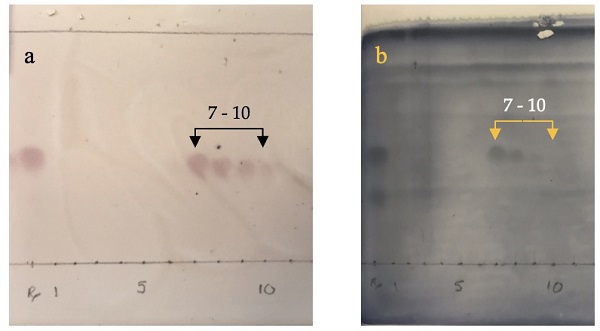
25. The major impurity that is present in crude 3 is again the unreacted camphorsultam 1 carried over from step A, which is completely inert towards ancillary transformations. But if desired, flash chromatography can be performed to obtain pure 2 as follows: The flash column (dimensions: 13 mm inner diameter, 203 mm in height) is wet packed with silica gel (15 g) using a solution of (4:1, v/v) hexanes-ethyl acetate (150 mm, height of the silica bed in the column). Azidoacetylsultam 3 (52.0 mg, dissolved in 1 mL of methylene chloride) is wet loaded onto the packed silica column. The column is eluted with 100 mL of (4:1, v/v) hexanes-ethyl acetate and then continued with 200 mL of (3:1, v/v) hexanes-ethyl acetate until the product completely eluted off the column. The fraction collection is begun (5-mL fractions) immediately after starting the solvent elution and each fraction is analyzed by TLC to find the product (Figure 12). The plates were developed using (3:1, v/v) hexanes-ethyl acetate as the mobile phase and visualized using both ninhydrin and cerium ammonium molybdate stain followed by heating (camphorsultam 1 is insensitive to ninhydrin stain). Column fractions 7-10 were combined and concentrated by rotary evaporation (35 ℃, starting with 50 mmHg and gradually lowering to 10 mmHg) and then at 0.1 mmHg to afford purified 3 (45.0 mg).
v98p0463-16.jpg
Figure 12. TLC analysis of the column chromatography fractions of 3, with (a) ninhydrin stain and (b) cerium ammonium molybdate stain (photos provided by submitter)

26. Pure azidoacetylsultam 3 has the following characteristics (data provided by submitters): mp 79-81 ℃; 1H NMR (500 MHz, CDCl3) δ: 4.36 (d, J = 17.3 Hz, 1H), 4.20 (d, J = 17.3 Hz, 1H), 3.91 (dd, J = 7.9, 4.9 Hz, 1H), 3.51 (d, J = 13.9 Hz, 1H), 3.45 (d, J = 13.8 Hz, 1H), 2.21 (dq, J = 14.0, 3.8 Hz, 1H), 2.12 (dd, J = 14.0, 7.9 Hz, 1H), 1.96-1.87 (m, 3H), 1.47-1.41 (m, 1H), 1.40-1.34 (m, 1H), 1.14 (s, 3H), 0.98 (s, 3H); 13C NMR (126 MHz, CDCl3) δ: 166.7, 65.4, 52.8, 51.5, 49.4, 48.0, 44.7, 38.2, 32.9, 26.5, 20.9, 20.0 ; HRMS (ESI) m/z calcd for C12H19N4O3S [M+H]+ 299.1178; found, 299.1192; IR (film): 2962, 2884, 2109, 1704, 1483, 1457, 1413, 1377, 1332, 1270, 1239, 1221, 1167, 1137, 1119, 1084, 1065, 1041, 983, 943, 923, 873, 855, 839, 807, 782, 758, 675, 634, 619, 553, 534, 495, 458 cm-1.
27. House vacuum was used (130 mmHg) for this purpose.
28. Number of moles of azidoacetylsultam 3 in the crude is calculated based on the purity percentage obtained from the quantitative NMR data.
v98p0463-22.gif
29. The crude product was added as a solid to the reaction mixture. Larger pieces were broken gently with a glass rod before addition to the reaction.
30. HPLC grade MeOH (certified ACS grade) was purchased from Fisher Scientific and used as received.
31. Hydrochloric acid (36.5 to 38.0% (w/w), certified ACS grade) was purchased from Fisher Scientific and used as received.
32. Palladium on carbon (10 wt%) was purchased from Sigma-Aldrich and used as received. The checkers purchased this catalyst from TCI.
33. The hydrogenolysis reaction using palladium on carbon (10 wt%) creates a significant fire hazard if the activated catalyst is allowed to dry. Hence, palladium on carbon was added to the reaction mixture mixed with water as a slurry to minimize the pyrophoricity.
34. During hydrogenolysis of azides, gaseous nitrogen is produced, hence every time before changing the hydrogen balloon, a cycle of evacuating and back-filling was performed.
35. After 24 h, TLC analysis indicated that a substantial amount starting material was still present. Hence another portion of 10 wt% Pd-C (2.50 g) was added following the described procedure.
36. The checkers observed remaining azide until the total reaction time had reached 40 h. The reaction was monitored by TLC, developed using (3:1, v/v) hexanes-ethyl acetate as the mobile phase and visualized using ninhydrin stain (Figure 13). The starting material forms a pink spot and the product forms a yellow spot upon heating with the stain. The Rf value of the starting material 1 was 0.41. The product doesn't move with the solvent and remains at the origin.
v98p0463-17.jpg
Figure 13. TLC analysis of the reaction mixture at 36 h (photo provided by submitter)

37. Celite 545 filtering aid (neutral or acidic - basic Celite leads to partial decomposition of the amine) was purchased form Fisher Scientific and used as received.
38. Care was taken to always maintain the solvent level above the Celite bed. Passing air through Pd-C, trapped on the Celite bed can creates a significant fire hazard, especially in the presence of methanol.
39. While concentrating, the product turned into a highly viscous liquid and then crystallized. After 24 h under 0.1 mmHg pressure, the large crystals were crushed using a spatula to facilitate the drying.
40. The submitters obtained 39.1 g of crude hydrochloride.
41. Glycylsultam in the free amine form is highly reactive. In solution it can react with itself and undergo nucleophile-induced deacylation to give back the parent sultam 1, which is indicative of this decomposition pathway. Hence, trapping the amine as an acid salt is important, where in this case it is converted into the stable hydrochloride salt. The salt can be stored at -20 ℃ for an extended period without decomposition, and free amine can be regenerated easily by an aq NaHCO3 neutralization.
42. Due to the excess amount of hydrochloric acid that was added to the reaction mixture during the hydrogenolysis, the actual weight of the ammonium salt 5 is higher than the theoretical value. Hence, the entire crude ammonium salt product obtained from the previous step was finely crushed and homogenized before weighing out 5.00 g for the aq. NaHCO3 neutralization. For the yield determination, a calculation was performed to determine the amount of free glycylsultam 4 that can be obtained from the entire batch 5, based on the value received for a 5.00 g sample (Note 46). The submitters used 5.00 g of crude material.
43. MColorpHast pH test strips (pH 6.5-10 and pH 5.2-7.2) were purchased from MilliporeSigma.
44. Due to the reactivity of the free amine, care was taken to perform the neutralization at 0 ℃ and to maintain the water bath temperature at 15-19 ℃ while concentrating the product under vacuum. When the neutralization and concentration were performed at higher temperatures, the product was observed to usually contain 3-5% of parent sultam 1 formed via deacylation.
45. Completion of the neutralization was confirmed by monitoring the pH of the reaction mixture. If needed, the product 4 can be visualized by TLC developed using (9:1, v/v) dichloromethane-methanol as the mobile phase and visualized using ninhydrin stain. The product forms a yellow spot with a Rf value of 0.40 (Figure 14).
v98p0463-18.jpg
Figure 14. TLC analysis of the Oppolzer's glycylsultam 4 (photo provided by submitter)

46. Glycylsultam 4 has the following characteristics (data provided by checkers): mp 118 - 121 ℃; [α]58923 +115.6 (c 1.00, CHCl3); 1H NMR pdf (400 MHz, CDCl3) δ: 3.93-3.84 (m, 2H), 3.76 (d, J = 18.1 Hz, 1H), 3.49 (d, J = 13.8 Hz, 1H), 3.43 (d, J = 13.8 Hz, 1H), 2.16 (dd, J = 12.4, 4.9 Hz, 1H), 2.12 - 2.04 (m, 1H), 1.96 - 1.83 (m, 3H), 1.46 (d, J = 8.6 Hz, 2H), 1.42 (d, J = 8.9 Hz, 1H), 1.36 (t, J = 9.4 Hz, 1H), 1.14 (s, 3H), 0.97 (s, 3H); 13C NMR pdf (176 MHz, CDCl3) δ: 173.1, 65.3, 52.9, 49.3, 48.0, 45.6, 44.8, 38.4, 33.0, 26.6, 20.9, 20.0; IR (film): 3412, 3353, 2970, 2920, 2887, 2360, 2176, 1688, 1541, 1457, 1420, 1377, 1317, 1269, 1235, 1218, 1164, 1130, 1113, 1083, 1061, 1041, 981, 940, 910, 874, 815, 766 cm-1. Purity of (4) was assessed to be 99% based on qNMR pdf analysis using 1,3,5-trimethoxybenzene as an internal standard. The checkers performed a second run on half scale, performing isolation on 1 g of crude material. This extraction yielded 0.58 g of product (99% purity) for a total yield of 83%.
47. The submitters reported the following result (based on 5.00 g of crude hydrochloride): 3.19 g, 89% yield, 98% purity.
Following are the calculations to determine the amount of free glycylsultam 4 present in the entire ammonium salt 5 batch (39.1 g), based on the neutralization data received for 5.00 g sample and the percent yield.
v98p0463-18.gif
Working with Hazardous Chemicals
The procedures in Organic Syntheses are intended for use only by persons with proper training in experimental organic chemistry. All hazardous materials should be handled using the standard procedures for work with chemicals described in references such as "Prudent Practices in the Laboratory" (The National Academies Press, Washington, D.C., 2011; the full text can be accessed free of charge at http://www.nap.edu/catalog.php?record_id=12654). All chemical waste should be disposed of in accordance with local regulations. For general guidelines for the management of chemical waste, see Chapter 8 of Prudent Practices.
In some articles in Organic Syntheses, chemical-specific hazards are highlighted in red "Caution Notes" within a procedure. It is important to recognize that the absence of a caution note does not imply that no significant hazards are associated with the chemicals involved in that procedure. Prior to performing a reaction, a thorough risk assessment should be carried out that includes a review of the potential hazards associated with each chemical and experimental operation on the scale that is planned for the procedure. Guidelines for carrying out a risk assessment and for analyzing the hazards associated with chemicals can be found in Chapter 4 of Prudent Practices.
The procedures described in Organic Syntheses are provided as published and are conducted at one's own risk. Organic Syntheses, Inc., its Editors, and its Board of Directors do not warrant or guarantee the safety of individuals using these procedures and hereby disclaim any liability for any injuries or damages claimed to have resulted from or related in any way to the procedures herein.
3. Discussion
A convenient and scalable preparation of chiral glycylsultam 4/ent-4 is described. The three-step procedure involves acylation of Oppolzer's camphor-derived sultam l/ent-1 with bromacetyl bromide (reaction A), displacement of bromide by azide anion (reaction B), and catalytic reduction of the azide (reaction C). The entire procedure can be performed on a large scale and does not involve any chromatographic separation or crystallization.
Glycylsultam 4/ent-4 is the NC component in the [C+NC+CC] cycloaddition, a robust multicomponent reaction that enables the asymmetric synthesis of highly functionalized pyrrolidines (Figure 15). The camphorsultam moiety plays four important roles in this reaction: (1) it enhances the acidity of the glycyl α-protons, thus accelerating the formation of the intermediate azomethine ylide, (2) it determines which diastereotopic face of the azomethine ylide will be attacked by the dipolarophile, overriding resident substrate chirality, (3) it facilitates product characterization: since natural camphor is enantiomerically pure, one can readily assess the diastereomeric purity of the cycloadduct using NMR or HPLC, and (4) it activates the aminoacyl carbon towards nucleophilic attack.
v98p0463-20.gif
Figure 15. Asymmetric multicomponent [C+NC+CC] synthesis of pyrrolidines. (XR and XS = antipodes of Oppolzer's camphorsultam)

Perhaps the feature that distinguishes the [C+NC+CC] cycloaddition from other azomethine ylide cycloadditions is the ability to employ structurally diverse enolizable aldehydes as the C component. This permits the use of structurally complex aldehydes. The aforementioned attributes have resulted in application of the asymmetric [C+NC+CC] cycloaddition to the synthesis of pyrrolidine-containing natural products and drugs (Table 1). Examples include cyanocycline A,2 the neuraminidase inhibitor A-315675,3 kaitocephalin,4 quinocarcin,5 and tetrazomine.6 The asymmetric [C+NC+CC] reaction has also been used for the synthesis of a focused library of heteroaryl substituted pyrrolidines for fragment based drug discovery.7
Table 1. Application of the asymmetric [C+NC+CC] reaction to the synthesis of pyrrolidine containing natural products and drugs
v98p0463-21.gif

During the course of these and related studies, our group required rather large quantities of both the R- and S -versions of Oppolzer's glycylsultam,8 which serves as the "NC" component in the [C+NC+CC] coupling reaction. In this Organic Syntheses procedure, we report a simple and very practical three-step synthesis of Oppolzer's glycylsultam that is amenable to large-scale production.
Initially, we used a variation of Oppolzer's route to chiral α-amino acids which was published in the late 80s to prepare the glycylsultam.9,10 This two-step process involved Me3Al-mediated acylation of the parent sultam with (MeS)2C=NCH2CO2Me11 to give (MeS)2C=NCH2COX*, followed by hydrolytic release of the primary amine. Chassaing and co-workers developed an alternative route to prepare the glycylsultam during their synthesis of isotopically labelled amino acids.12 The 15N-labeled hydrochloride glycylsultam salt was prepared by acylation of the sultam potassium salt with BrOCCH2Br, followed by a SN2 displacement with 15N-phthalimide potassium salt and finally the N-deprotection. For 13C-labeling, Chassaing's approach was similar to what Oppolzer reported8 but used labelled (Ph)2C=NCH213CO2Et and (Ph)2C=N13CH2CO2Et for the acylation of the parent sultam. Apart from this, an interesting alternative was reported, in which the parent sultam sodium salt was acylated with the mixed anhydride of N-Boc protected labeled glycine followed by removal of the Boc group to obtain glycylsultam hydrochloride salt. It was stated that this synthesis could be performed on a multi-hundred-gram scale, although no experimental details were given. Dogan and coworkers reported acylation of the parent sultam with azidoacetyl chloride to produce the corresponding azidoacetylsultam, which was subjected to a Staudinger reaction to give the desired glycylsultam.13 Since, scale-up of this synthesis would involve large quantities of the potentially explosive azidoacetyl chloride,14 a more atom-economical and safe process was desirable. Our group published an alternative route to afford the desired glycylsultam via the Delépine reaction.15 The reaction cascade involves nucleophilic displacement of known BrCH2COX* by the ammonia surrogate hexamethylenetetramine (HMTA), followed by acid decomposition to yield the glycylsultam ammonium salt. This process is relatively safe and environmentally benign but suffers from a non-ideal halide transfer reaction and two extensive heating steps which is undesirable on an increased scale.
In the route to Oppolzer's glycylsultam reported herein, the lithium salt of camphor-derived sultam 1 is acylated with bromoacetyl bromide at - 78 ℃ to give the known N-bromoacetylsultam 2. Except for a 20-fold increase in scale, the procedure was the same as that reported by Sweeney and coworkers.16 Foregoing purification at this stage, the crude bromide 2 was treated with NaN3 in DMF at room temperature to effect SN2 displacement and produce the stable azidoacetylsultam 3. After extractive workup, this material was subjected to catalytic hydrogenolysis in the presence of conc. HCI followed by NaHCO3 neutralization to give the desired product 4 in good overall yield (64% on 30 g scale and 67% on 60 g scale). Each of these reactions gives solid crystalline products. The entire sequence can be performed on a large scale without the need for chromatographic purification at any stage. The R- and S- glycylsultams so obtained are suitable for use in our asymmetric multicomponent [C+NC+CC] coupling reactions.

References and Notes
  1. Contact information: UR: Warren Center for Neuroscience Drug Discovery, Vanderbilt University, Nashville, Tennessee, 37232-0697, USA. E-mail: upendra.a.rathnayake@vanderbilt.edu. HÜK: Department of Pharmacological Sciences, Icahn School of Medicine at Mount Sinai, 1425 Madison Avenue, New York 10029, USA. E-mail: husnu.kaniskan@mssm.edu. JH: Johns Manville, 10100 West Ute Avenue Littleton, Colorado 80127, USA. E-mail: jieyu.hu@jm.com. CGP: Department of Chemistry, The Scripps Research Institute, 130 Scripps Way, 3B3 Jupiter, Florida 33458, USA. E-mail: cparker@scripps.edu. PG: Department of Chemistry, Washington State University, Pullman, Washington 99164-4630, USA. E-mail: ppg@wsu.edu. Phone: (+1) 509-335-7620. ORCID: 0000-0002-6503-9550. We thank the National Science Foundation for financial support. The authors dedicate this procedure to the memory of Professor Wolfgang Oppolzer.
  2. Garner, P.; Kaniskan, H. Ü.; Keyari, C. M.; Weerasinghe, L. J. Org. Chem. 2011, 76 (13), 5283-5294.
  3. Garner, P.; Weerasinghe, L.; Youngs, W. J.; Wright, B.; Wilson, D.; Jacobs, D. Org. Lett. 2012, 14 (5), 1326-1329.
  4. Garner, P.; Weerasinghe, L.; Van Houten, I.; Hu, J. Chem. Commun. 2014, 50 (38), 4908-4910.
  5. Fang, S.-L.; Jiang, M.-X.; Zhang, S.; Wu, Y.-J.; Shi, B.-F. Org. Lett. 2019, 21 (12), 4609-4613.
  6. Qi, W.-Y.; Fang, S.-L.; Xu, X.-T.; Zhang, K.; Shi, B.F. Organic Chemistry Frontiers 2021, 8, 1802-1807.
  7. Garner, P.; Cox, P. B.; Rathnayake, U.; Holloran, N.; Erdman, P. ACS Med. Chem. Lett. 2019, 10 (5), 811-815.
  8. Although Oppolzer did not actually report the parent glycylsultam (see references 9 and 10), we feel that it is appropriate to refer to it as "Oppolzer's glycylsultam" for descriptive reasons.
  9. Oppolzer, W.; Moretti, R.; Thomi, S. Tetrahedron Lett. 1989, 30 (44), 6009-6010.
  10. Oppolzer, W.; Moretti, R.; Zhou, C. Helv. Chim. Acta. 1994, 77 (8), 2363-2380.
  11. Hoppe, D.; Beckmann, L. Liebigs Annalen der Chemie 1979, 2066-2075.
  12. Martin, A.; Chassaing, G.; Vanhove, A. Isotopes in Environmental and Health Studies 1996, 32 (1), 15-19.
  13. Dogan, Ö.; Öner, I.; Ülkü, D.; Arici, C. Tetrahedron: Asymmetry 2002, 13 (19), 2099-2104.
  14. Nicolaides, E. D.; Westland, R. D.; Wittle, E. L. J. Am. Chem. Soc. 1954, 76 (11), 2887-2891.
  15. Isleyen, A.; Gonsky, C.; Ronald, R. C.; Garner, P. Synthesis 2009, 08, 1261-1264.
  16. Sweeney, J. B.; Cantrill, A. A.; McLaren, A. B.; Thobhani, S. Tetrahedron 2006, 62 (15), 3681-3693.

Appendix
Chemical Abstracts Nomenclature (Registry Number)

(2S)-Bornane-2,10-sultam: 10,10-dimethyl-3λ6-thia-4-azatricyclo[5.2.1.01,5]decane 3,3-dioxide; (108448-77-7)

THF: Tetrahydrofuran; (109-99-9)

n-Butyllithium: Tetra-μ3-butyl-tetralithium; (109-72-8)

Hexanes; (110-54-3)

Bromoacetyl bromide: 2-Bromoacetyl bromide; (598-21-0)

Diethyl ether: Ethoxyethane; (60-29-7)

Na2SO4: Sodium sulfate; (7757-82-6)

DMF: N,N-Dimethylformamide; (68-12-2)

NaN3: Sodium azide; (26628-22-8)

MeOH: Methanol; (67-56-1)

HCl: Hydrochloric acid; (7647-01-0)

Pd-C: Palladium on carbon; (7440-05-3)

NaHCO3: Sodium bicarbonate; (144-55-8)

CH2Cl2: Dichloromethane; (75-09-2)

Phil Garner received his Ph.D. degree from the University of Pittsburgh under the guidance of Paul Dowd. This was followed by postdoctoral work in Paul Grieco's laboratory at Indiana University. In 1983, he took up his first faculty position at Illinois Institute of Technology. He moved to Case Western Reserve University in 1985 where he established a research program that focused on development of new methodology. He headed west to Washington State University in 2007. His scientific accomplishments include a widely used serinal derivative that has come to bear his name. He currently holds the rank of Professor of Chemistry.
Upendra Rathnayake received his B.S. (Hons) in chemistry from university of Sri Jayewardenepura, Sri Lanka and M.S. (with a major component of research) in chemical and process engineering from the University of Moratuwa, Sri Lanka. After working as a scientist at Sri Lanka Institute of Nanotechnology (SLINTEC) for two and half years, he moved to Washington State University to pursue his PhD under the supervision of Prof. Philip Garner. His doctoral studies are focused on application of the asymmetric [C+NC+CC] coupling reaction to natural product synthesis.
H. Ümit Kaniskan earned his Ph.D. at Case Western Reserve University under the supervision of Dr. Philip Garner. He then pursued his postdoctoral studies in Dr. Movassaghi's group at Massachusetts Institute of Technology. Dr. Kaniskan then joined Dr. Jin's laboratory UNC at Chapel Hill and later at the Icahn School of Medicine at M. Sinai as a postdoctoral research associate. He is currently an Associate Professor in the Department of Pharmacological Sciences, and Assistant Director of Mount Sinai Center for Therapeutics Discovery at the Icahn School of Medicine at Mount Sinai. His research interests include development of inhibitors of protein methyltransferases and targeted protein degradation.
Jieyu Hu obtained her B.S. in Pharmacy from Zhejiang University and M. S. in Pharmacy from Fudan University in China, and Ph.D. in Organic Chemistry from Case Western Reserve University. After joining Corning Incorporated, she continued her organic synthesis career and then she focused on flow chemistry and polymer synthesis. Her career focus is in the field of materials science at Johns Manville.
Christopher Parker earned his B.S. in Chemistry from Case Western Reserve University (2007) working in the lab of Philip Garner and a Ph.D. in Chemistry from Yale University (2013) under the supervision of David A. Spiegel. He then carried out postdoctoral studies under the supervision of Benjamin F. Cravatt as a fellow of the American Cancer Society at The Scripps Research Institute. Chris is currently an Assistant Professor in the Department of Chemistry at Scripps Research. His group develops and applies chemical proteomic methods to discover useful chemical probes to investigate various protein targets relevant to human health.
Bogdan R. Brutiu received his M.Sc at the University of Vienna in 2019. He is currently a second-year graduate student in the group of Prof. Nuno Maulide. His research focuses on the chemistry of destabilized carbocations and C-C coupling reactions mediated by hydride transfer.
Martina Drescher is the lead technician of the Maulide group at the University of Vienna, where she has worked with several group leaders over the course of 38 years.
Daniel Kaiser received his Ph.D. at the University of Vienna in 2018, completing his studies under the supervision of Prof. Nuno Maulide. After a postdoctoral stay with Prof. Varinder K. Aggarwal at the University of Bristol, he returned to Vienna in 2020 to assume a position as senior scientist in the Maulide group. His current research focusses on the chemistry of destabilized carbocations and related high-energy intermediates.