^
Top
Org. Synth. 2025, 102, 601-624
DOI: 10.15227/orgsyn.102.0601
Umpolung Synthesis of α-Bromo Secondary Amides from Unactivated Hydroxamates
Submitted by Rui Wang1, Hao Cao1, and Wenbo H. Liu*1
Checked by Irmgard Tiefenbrunner, Angela Hofmeister and Nuno Maulide
1. Procedure (Note 1)
A. 4-Phenylbutanoyl chloride (2). Under an ambient atmosphere, 4-phenylbutanoic acid 1 (1.64 g, 10.0 mmol, 1.00 equiv) (Note 2) was added to an oven-dried single-necked flask (100-mL) (Note 3) with a 2.0 cm × 1.0 cm Teflon-coated rugby-shaped stir bar. The flask was sealed with a septum, under ambient atmosphere, and an empty balloon (used as a pressure-equalizing measure) was connected using a needle. Anhydrous dichloromethane (20 mL) (Note 4) was added in three portions using 20-mL, and then a catalytic amount of N,N-Dimethylformamide (20.0 mL) (Note 5) was added with a 100-mL microsyringe. The solution was stirred at 500 rpm. (Figure 1A). Then, at ambient temperature (20 ℃), (COCl)2 (1.27 mL, 15.0 mmol, 1.50 equiv) (Note 6) was added to the reaction mixture with a plastic syringe (2.5-mL) at an addition rate of two drops per second for about 3 min with immediate gas evolution (CO and CO2) (Figure 1B). The reaction mixture was further stirred at 500 rpm for 2 h at ambient temperature (20 ℃) (Figure 1C). Following this time, the stir bar was removed and adhering solution was rinsed into the flask with 2 mL dichloromethane. The reaction mixture was concentrated (Figure 1D) under reduced pressure (40 ℃, 600 mbar to 30 mbar) and dried in vacuo (1 × 10⁻¹ mbar) at ambient temperature (20 ℃) for 3 h to afford crude 4-phenylbutanoyl chloride 2 (1.83 g, >99%) as a yellow oil (Note 7) (Figure 1E), which was used directly without further purification for the next step.
v102p0601-2.jpg
Figure 1. 4-Phenoxybenzoyl chloride reaction setup; A. reaction mixture before addition of (COCl)2; B. reaction mixture after addition of (COCl)2; (C) reaction mixture after stirring for 2 h; D. the concentration of reaction mixture on a rotary evaporator at 40 ℃; E. reaction mixture after concentration

B. N-Hydroxy-N-methyl-4-phenylbutanamide (3). Under an ambient atmosphere, MeNHOH∙HCl (1.67 g, 20.0 mmol, 2.00 equiv) (Note 8) was added to the single-necked flask (100-mL) containing 4-phenylbutanoyl chloride 2 (1.83 g, 10.0 mmol, 1.00 eq.) and a 2.0 cm × 1.0 cm Teflon-coated rugby-shaped stir bar. Dichloromethane (20 mL) was added to the mixture using a plastic syringe (20-mL). Then NaHCO3 (4.20 g, 50.0 mmol, 5.00 equiv) (Note 9) was added to the mixture in 10 portions over a period of 5 min with a small medicine spoon while stirring at 500 rpm (Figure 2A). Dichloromethane (10 mL) was added to the reaction mixture, stirring was continued at 500 rpm. The reaction was further stirred at ambient temperature (20 ℃) for 13 h (Note 10) (Figure 2B). H2O (30 mL) was added to the reaction mixture and stirred for 5 min. Then the mixture was poured into a separating funnel (100-mL) for separation. The single-necked flask (100-mL) was washed with dichloromethane (10 mL), then the rinse solution was transferred into the separating funnel (100-mL), and the aqueous phase was extracted, draining the organic layer into a 250-mL Erlenmeyer flask. The above operation (rinse the flask with dichloromethane and then transfer it to a separatory funnel for separation) was repeated twice. After that, the combined organic layer was dried over anhydrous Na2SO4 (ca. 4 g) (Note 11) for 5 min. The solution was filtered through cotton contained in a glass funnel into a single-necked flask (100-mL), and the source flask was rinsed with dichloromethane (3 × 10 mL). The rinses were filtered through the same cotton and combined with the rest of the filtrate in the receiving flask. The flask was connected to a rotary evaporator, concentrated under reduced pressure (40 ℃, 600 mbar to 30 mbar), and dried in vacuo (1 × 10⁻¹ mbar) at ambient temperature (20 ℃) for 2 h to afford crude N-hydroxy-N-methyl-4-phenylbutanamide 3 (1.88 g, Figure 2C) (Notes 12,13,14), which was used directly without further purification for the next step.
v102p0601-3.jpg
Figure 2. N-Hydroxy-N-methyl-4-phenylbutanamide reaction setup; A. adding NaHCO3; B. reaction mixture after stirring for 13 h; C. crude N-hydroxy-N-methyl-4-phenylbutanamide (photo provided by authors)

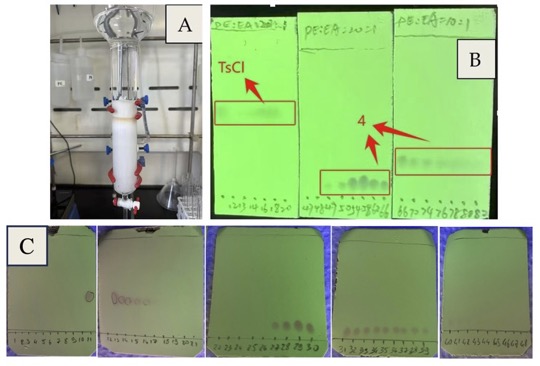
C. N-Methyl-4-phenyl-N-(tosyloxy)butanamide (4). Under an ambient atmosphere, p-toluenesulfonyl chloride (TsCl, 2.25 g, 11.8 mmol, 1.20 equiv) (Note 15) was added to the single-necked flask (100-mL) containing N-hydroxy-N-methyl-4-phenylbutanamide 3 (1.88 g) and a 2.0 cm × 1.0 cm Teflon-coated rugby-shaped stir bar. Dichloromethane (20 mL) was added to the mixture, which was subsequently cooled to 0 ℃ using an ice/water bath. Then, a solution of Et3N (1.64 mL, 11.8 mmol, 1.20 equiv) (Note 16) in dichloromethane (2 mL), was added dropwise (ca. 2 drops/second) with a plastic syringe (5-mL) over a period of 5 min (Figure 3A). After addition, the reaction solution turned cloudy (Figure 3B). The reaction was stirred at 700 rpm at ambient temperature (20 ℃) for 2 h (Figure 3C) (monitored by TLC, Note 17). H2O (20 mL) was added to the reaction mixture in one portion and stirred for 5 min. Then the mixture was poured into a separatory funnel (100-mL), and the single-necked flask (100-mL) was washed with dichloromethane (10 mL), which was added to the separatory funnel. The phases were separated, draining the organic layer into a 250-mL Erlenmeyer flask. The flask was rinsed two further times with dichloromethane (10 mL), each time using the organic solution to extract the aqueous phase, combining the organic layers after each step. Thereafter, the combined organic layers were dried over anhydrous Na2SO4 (ca. 4 g) for 5 min. After filtration through cotton plug contained in a glass funnel, using a single-necked flask (100-mL) as the receptacle, the source flask was further washed with dichloromethane (3 × 10 mL), which was combined and transferred to the flask. The flask was connected to a rotary evaporator and afterward concentrated under reduced pressure (40 ℃, 600 mbar to 30 mbar). The residue was purified by chromatography on silica gel (Note 18) (heptanes/ethyl acetate) to afford N-methyl-4-phenyl-N-(tosyloxy)butanamide 4 (3.06 g, 88%, 3 steps) as a colorless oil (Figure 3D) (Note 19).
v102p0601-4.jpg
Figure 3. N-Methyl-4-phenyl-N-(tosyloxy)butanamide reaction setup and purification; A. reaction mixture at 0 ℃; B. reaction mixture after addition of Et3N C. reaction mixture after stirring for 2 h; D. N-methyl-4-phenyl-N-(tosyloxy)butanamid (Photos A-C provided by the authors, photo D provided by the checkers)

D. 2-Bromo-N-methyl-4-phenylbutanamide (5). Under ambient atmosphere, N-methyl-4-phenyl-N-(tosyloxy)butanamide 4 (3.05 g, 8.78 mmol, 1.00 equiv) was added to a single-necked flask (100-mL) with a 2.0 cm × 1.0 cm Teflon-coated rugby-shaped stir bar. The flask was transferred to a glove box filled with argon. In the glove box, MgBr2∙Et2O (2.49 g, 9.68 mmol, 1.10 equiv) in powdered form (Note 20) was charged into the flask, which was sealed with a rubber septum and brought outside the glove box. The flask was connected to an argon manifold using rubber tubing and a needle, after which anhydrous 1,2-dichloroethane (44 mL) (Note 21) was added. The flask was placed in an ultrasonic bath for 10-30 min at ambient temperature (20 ℃) to crush MgBr2∙Et2O solid blocks into powder (Figure 4A and 4B) (Note 22). Then, while stirring (500 rpm) at ambient temperature (20 ℃), N,N-diisopropylethylamine (1.67 mL, 9.66 mmol, 1.10 equiv) (Note 23) was added dropwise (ca. 1 drop/second) with a plastic syringe (2.5 mL) over a period of 5 min. The color of the reaction mixture changed from white (Figure 4C) to pale-yellow (Figure 4D). The flask was placed into an oil bath preheated to 40 ℃ and was then further stirred at 500-900 rpm for 4 h (Figure 4E). After TLC analysis indicated full consumption of the starting material (Note 24), H2O (44 mL) was added to the reaction mixture in one portion, and stirring was continued for 5 min. The mixture was poured into a separating funnel (100-250 mL) for separation. The single-necked flask (100-mL) was washed with dichloromethane (10 mL), and the rinse solution was poured into the separating funnel. The phases were separated, draining the organic layer into a 250-mL Erlenmeyer flask. The flask was rinsed two further times with dichloromethane (10 mL), each time using the organic solution to extract the aqueous phase, combining the organic layers after each step. After that, the combined organic layer was dried over anhydrous Na2SO4 (ca. 6 g) for 10 min.
v102p0601-5.jpg
Figure 4. 2-Bromo-N-methyl-4-phenylbutanamide reaction setup and product; A. reaction mixture with many solid blocks before crushing; B. reaction mixture after crushing; C. reaction mixture before addition of DIPEA; D. reaction mixture after addition of DIPEA; E. reaction mixture after stirring at 40 ℃ for 4 h; F. final product 2-bromo-N-methyl-4-phenylbutanamide

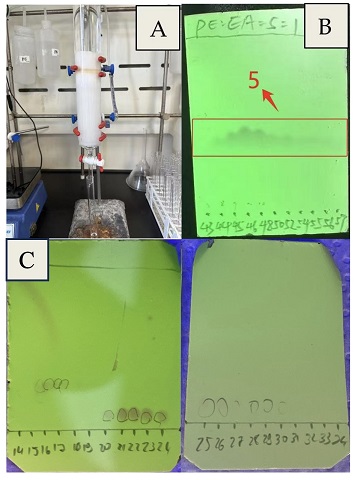
After filtration through cotton contained in a glass funnel, using a single-necked flask (250-mL) as the receptacle, the source flask was further washed with dichloromethane (6 × 10 mL), and the rinses were transferred to the flask. The flask containing the combined filtrate was connected to a rotary evaporator and afterward concentrated under reduced pressure (40 ℃, 600 mbar to 30 mbar). The residue was purified by chromatography on silica gel (Note 25) (heptanes/ethyl acetate) to afford 2-bromo-N-methyl-4-phenylbutanamide 5 (1.94 g, 86% yield, 99% purity as determined by qNMR using 1,3,5-trimethoxybenzene as an internal standard) as a colorless solid (Note 26, 27) (Figure 4F).
2. Notes
1. Prior to performing each reaction, a thorough hazard analysis and risk assessment should be carried out with regard to each chemical substance and experimental operation on the scale planned and in the context of the laboratory where the procedures will be carried out. Guidelines for carrying out risk assessments and for analyzing the hazards associated with chemicals can be found in references such as Chapter 4 of "Prudent Practices in the Laboratory" (The National Academies Press, Washington, D.C., 2011; the full text can be accessed free of charge at https://www.nap.edu/catalog/12654/prudent-practices-in-the-laboratory-handling-and-management-of-chemical. See also "Identifying and Evaluating Hazards in Research Laboratories" (American Chemical Society, 2015) which is available via the associated website "Hazard Assessment in Research Laboratories" at https://www.acs.org/content/acs/en/about/governance/committees/chemicalsafety/hazard-assessment.html. In the case of this procedure, the risk assessment should include (but not necessarily be limited to) an evaluation of 4-phenylbutanoic acid, dichloromethane, DMF, (COCl)2, MeNHOH∙HCl, NaHCO3, TsCl, Et3N, MgBr2∙Et2O, 1,2-dichloroethane, N-ethyldiisopropylamine, silica gel, petroleum ether, ethyl acetate, anhydrous Na2SO4 as well as the proper procedures for working with UV-light sources. UV-C light (254 nm) is especially damaging to the eyes and skin. The lamps should never be turned on while the door to the photoreactor is open.
2. 4-Phenylbutanoic acid (>98%) was purchased from leyan.com Shanghai, China, and was used as received. The checkers used 4-phenylbutanoic acid (98%) purchased from BLD pharm.
3. The oven-dried single-necked flask (100-mL) should be weighed before setting up the reaction.
4. Anhydrous dichloromethane was obtained from GHTECH Shantou, China, and was used as received. The checkers used dichloromethane purchased from Thermo Fisher Scientific.
5. Anhydrous N,N-Dimethylformamide (DMF, AR) was obtained from Macklin Shanghai, China, and was used as received.The checkers used DMF purchased from Thermo Fisher Scientific.
6. Oxalyl chloride [(COCl)2, 98%] was obtained from Energy-chemical.com Anqing, China, and was used as received. The checkers used Oxalyl chloride (>98%) purchased from TCI.
7. On half-scale, the checkers obtained 0.90 g (99%) of product. The authors reported obtaining 1.82 g (99%) of product on full scale. Characterization data of 4-phenylbutanoyl chloride 2: 1H NMR pdf (700 MHz, Chloroform-d) δ 7.31 (t, J = 7.6 Hz, 2H), 7.22 (t, J = 7.4 Hz, 1H), 7.17 (d, J = 7.5 Hz, 2H), 2.90 (t, J = 7.3 Hz, 2H), 2.69 (t, J = 7.5 Hz, 2H), 2.05 (p, J = 7.4 Hz, 2H). 13C NMR pdf (176 MHz, Chloroform-d) δ 173.8, 140.5, 128.8, 128.6, 126.5, 46.4, 34.4, 26.7. IR (film): 3063, 3028, 2935, 2864, 1797, 1603, 1497, 1454, 1403, 1362,1166, 1084, 1054, 1030, 962, 929, 856, 819, 747, 719, 700, 682 cm-1. GC-QTOF of 2 showed only the mass of the corresponding acid (1): [M] calc'd for C10H12O2: 164.0837. Found: 164.0830.
8. MeNHOH∙HCl (>98%) was purchased from bidepharm.com Shanghai, China, and was used as received. The checkers used MeNHOH∙HCl (97%) purchased from BLD pharm.
9. NaHCO3 (>99.5%) was obtained from Macklin Chemical Shanghai, China, and was used as received. The checkers used NaHCO3 (>99.5%) purchased from Sigma-Aldrich.
10. TLC (Figure 5) analysis was performed on silica gel plates (0.15-0.2 mm, glass-backed, which was purchased from Nuotai Biotechnology Co., Ltd. Shanxi, China) with hexane:ethyl acetate = 1:1 (v/v) as the eluent. The plate was visualized using a UV lamp (254 nm). The N-hydroxy-N-methyl-4-phenylbutanamide 3: Rf = 0.37 (hexane:EA = 1:1, v/v).
v102p0601-6.jpg
Figure 5. TLC analysis by UV (eluent: PE: EA = 1:1, v/v) (photo provided by authors)

11. Anhydrous Na2SO4 (>99%) was purchased from Tianjin ZhiYuan Reagent Co., Ltd, China, and used as received. The checkers used Na2SO4 (>99.5%) purchased from Thermo Fisher Scientific.
12. On half-scale, the checkers obtained 0.95 g of product. The authors reported obtaining 1.90 g of product on full scale.
13. To obtain an analytically pure sample of compound 3, roughly 450 mg of crude product was purified by flash column chromatography. A column (~2 cm diameter) was filled to 1/3 with ethyl acetate/heptanes = 1:1. To this, 13 g of silica gel (suspended in 50 mL of the same solvent mixture) were added and pressure was applied using a hand pump to compress the silica gel and remove excess solvent. The crude material, further liquified by addition of 250 μL dichloromethane, was transferred onto the silica gel. The flask, which had contained the crude mixture, was washed with additional 500 μL of dichloromethane, which was also transferred onto the silica gel. The walls of the column were washed with solvent mixture (ethyl acetate/heptanes = 1:1, 2 x 1 mL). After topping the silica gel with sand (1 cm), the column was filled with the same eluent mixture (110 mL) and collection of 12 mL fractions was started. Following elution of the first solvent portion, elution was continued with ethyl acetate/heptanes = 6:4 (100 mL). The product eluted in fractions 6-14 (Figure 6) and these fractions were combined in a 250 mL round-bottom flask. The solvent was removed under reduced pressure using a rotary evaporator (40 ℃, 660 to 20 mbar), followed by high vacuum (23 ℃, 10-1 mbar), and the product was isolated as a colorless oil (361 mg, 1.87 mmol, 93% - assuming a 2 mmol scale). An Rf of 0.31 in ethyl acetate/heptanes = 7:3 was determined.
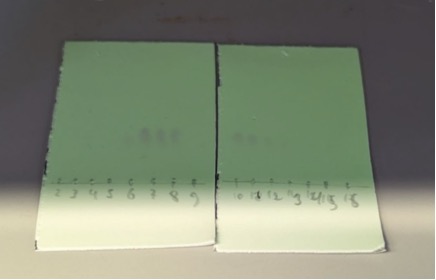
v102p0601-7.jpg
Figure 6. TLC of collected fractions (eluent: EA/heptanes = 7:3 v/v); product was detected in fractions 6-14.

14. Characterization data of N-hydroxy-N-methyl-4-phenylbutanamide 3: 1H NMR pdf (600 MHz, Chloroform-d) δ 8.50 (s, 1H), 7.29 (t, J = 7.5 Hz, 2H), 7.20 (t, J = 7.3 Hz, 1H), 7.18 (d, J = 7.3 Hz, 2H), 3.27 (s, 3H), 2.68 (t, J = 7.5 Hz, 2H), 2.54 - 2.25 (m, 2H), 2.08 - 1.93 (m, 2H). 13C NMR pdf (151 MHz, Chloroform-d) δ 167.2, 141.2, 128.6 (4C), 126.2, 35.8, 35.1, 30.1, 26.6. IR (film): 3164, 3086, 3064, 3027, 2924, 2861, 1604, 1496, 1453, 1390, 1196, 1113, 747, 699 cm-1. [M-H] calc'd for C11H14NO2-: 192.1030. Found: 192.1036. Determination of purity: 19.3 mg (0.100 mmol) of N-hydroxy-N-methyl-4-phenylbutanamide (3) and 16.6 mg (0.0987 mmol) 1,3,5-trimethoxybenzene (>98%) were dissolved in CDCl3. By qNMR pdf analysis, the purity was determined to be 98.8%.
15. p-Toluenesulfonyl chloride (TsCl, >99%) was obtained from Energy Chemical Shanghai, China, and was used as received. The checkers used p-toluenesulfonyl chloride purchased from Sigma-Aldrich.
16. Triethylamine (Et3N, >99%) was obtained from aladdin-e.com Shanghai, China, and was used as received. The checkers used triethylamine purchased from Sigma-Aldrich.
17. TLC (Figure 7A) analysis was performed on silica gel plates (TLC silica gel GF254, adhesive: sodium carboxymethyl cellulose, thickness: 0.15-0.2 mm, glass-backed, obtained from Nuotai Biotechnology Co., Ltd. Shanxi, China) with petroleum ether: ethyl acetate = 10:1 (v/v) as an eluent. The plate was visualized using a UV lamp (254 nm). N-Methyl-4-phenyl-N-(tosyloxy)butanamide 4: Rf = 0.25 (PE: EA = 10:1, v/v). The checkers employed an eluent system of heptanes/ethyl acetate. TLC (Figure 7B) analysis was performed on silica gel plates (TLC aluminium sheets silica gel 60 with fluorescence indicator, thickness: 0.2 mm, obtained from Macherey-Nagel GmbH, Germany) with heptanes:ethyl acetate = 10:1 (v/v). The plate was visualized using a UV lamp (254 nm). N-Methyl-4-phenyl-N-(tosyloxy)butanamide 4: Rf = 0.17 (heptanes:ethyl acetate = 10:1, v/v).
v102p0601-8.jpg
Figure 7. TLC analysis by UV (eluent: (A) PE: EA = 10:1, v/v; (B) heptanes: EA = 10:1, v/v) (photo provided by authors)

18. Flash column chromatography (Figure 8A) was performed on silica gel (230-400 mesh, purchased from Macherey-Nagel GmbH, Germany, and was used as received). A column with a 4.6 cm diameter x 25.4 cm height was dry-packed with 60 g of silica gel, and the column was compacted using a hand pump. The concentrated ca. 4 g crude product was dissolved in dichloromethane (10 mL), which was then mixed with ca. 4 g dry silica gel for sample preparation by vacuum under reduced pressure (40 ℃, 600 mbar to 30 mbar). The uniformly mixed silica gel-containing sample was subsequently added to the compacted column. The column was gently tapped to ensure that the sample layer remained even. The top layer of silica gel was layered with Na2SO4 to provide a buffering effect and prevent the silica gel from being washed away by eluent. The eluent (petroleum ether:ethyl acetate = 40:1, 410 mL - the checkers used heptanes instead of petroleum ether) was then added to the top of the Na2SO4, with fraction collection (tube size: 20 mL) beginning immediately. Then the eluent solvent system was switched to PE:ethyl acetate = 20:1 (v/v, 420 mL), followed by PE:ethyl acetate = 10:1 (v/v, 880 mL). The desired product was obtained in tubes 49-82 (Figure 8B, using heptanes:ethyl acetate, the checkers detected product in fractions 59-99 using 1210 mL of eluent on full scale and in fractions 27-42 on half scale, Figure 8C). The combined solution containing the pure product was concentrated on a rotary evaporator (40 ℃, 600 mbar to 30 mbar) and dried in a high vacuum (ambient temperature (20 ℃), 1 × 10⁻¹ mbar) for 2 h.
v102p0601-9.jpg
Figure 8. A. chromatography column; B. fraction collection (eluent: PE:EA = 20:1 and 10:1, v/v); C. Half-scale fraction collection with cuvettes (eluent: heptanes:EA = 10:1, v/v); product was detected in fractions 27-42 (photos A and B provided by authors and photo C provided by checkers)

19. On half-scale, the checkers obtained 1.60 g (92%) of product. The authors reported obtaining 3.16 g (91%) of product on full scale. Whereas the authors reported a colorless solid (Figure 9), the compound did not solidify in the checkers' hands, and they obtained a colorless oil. Characterization data of N-methyl-4-phenyl-N-(tosyloxy)butanamide 4: 1H NMR pdf (600 MHz, Chloroform-d) δ 7.82 (d, J = 8.3 Hz, 2H), 7.36 (d, J = 8.1 Hz, 2H), 7.28 (t, J = 7.5 Hz, 2H), 7.20 (t, J = 7.4 Hz, 1H), 7.12 (d, J = 7.0 Hz, 2H), 3.14 (s, 3H), 2.50 (t, J = 7.6 Hz, 2H), 2.46 (s, 3H), 2.20 (t, J = 7.4 Hz, 2H), 1.79 (p, J = 7.6 Hz, 2H). 13C NMR pdf (151 MHz, Chloroform-d) δ 178.3, 146.9, 141.6, 130.8, 130.3, 129.5, 128.6, 128.5, 126.1, 38.4, 35.2, 32.1, 25.6, 22.0. IR (film): 3084, 3061, 3027, 3002, 2943, 2867, 1697, 1597, 1496, 1454,1380, 1295, 1212, 1194, 1180, 1118, 1090, 1030, 1019, 912, 867, 816, 801, 751,701, 688, 662, 630, 554 cm-1. [M+H] calc'd for C18H22NO4S+: 348.1264. Found: 348.1261. Determination of purity: 34.4 mg (0.0990 mmol) of N-methyl-4-phenyl-N-(tosyloxy)butanamide (4) and 16.5 mg (0.0981 mmol) 1,3,5-trimethoxybenzene (>98%) were dissolved in CDCl3. By qNMR pdf analysis, the purity was determined to be 99.3%.
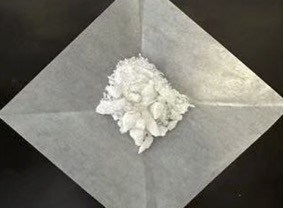
v102p0601-10.jpg
Figure 9. Solid N-methyl-4-phenyl-N-(tosyloxy)butanamide (photo provided by authors)

20. Magnesium bromide ethyl etherate (MgBr2∙Et2O, 99%) was obtained from Energy-chemical.com Anqing, China, and was used as received. The checkers used magnesium bromide ethyl etherate (99%) purchased from Sigma-Aldrich.
21. 1,2-Dichloroethane (anhydrous, water ≤ 50 ppm, 99.8%) was obtained from J&K Scientific, China, and was used as received. The checkers used 1,2-dichloroethane purchased from Sigma-Aldrich.
22. The purchased magnesium bromide ethyl etherate has many solid blocks, which need to be crushed into powder as much as possible, otherwise it may affect the reaction yield. For the authors' full-scale run and the checkers' half-scale run, a crushing time of 10 min was sufficient, whereas the checkers' full-scale run required sonication for 30 min to reach the desired consistency.
23. N,N-Diisopropylethylamine (DIPEA, 99%) was obtained from Macklin Shanghai, China, and was used as received. The checkers used N,N-diisopropylethylamine (>98%) purchased from Sigma-Aldrich.
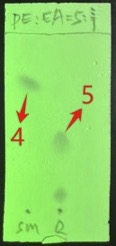
24. The reaction is monitored by TLC: Stirring is stopped to allow the solid to settle, and the reaction supernatant is taken for TLC analysis. TLC (Figure 10) analysis of the reaction mixture was performed on silica gel plates (TLC silica gel GF254, adhesive: sodium carboxymethyl cellulose, thickness: 0.15-0.2 mm, glass-backed, obtained from Nuotai Biotechnology Co., Ltd. Shanxi, China) with petroleum ether: ethyl acetate = 5:1 (v/v) as an eluent. The plate was visualized using a UV lamp (254 nm). The 2-bromo-N-methyl-4-phenylbutanamide 5: Rf = 0.40 (PE: EA = 5:1, v/v). The checkers employed an eluent system of heptanes/ethyl acetate. TLC analysis was performed on silica gel plates (TLC aluminium sheets silica gel 60 with fluorescence indicator, thickness: 0.2 mm, obtained from Macherey-Nagel GmbH, Germany) with heptanes:ethyl acetate = 4:1 or 5:1 (v/v) as an eluent. The plate was visualized using a UV lamp (254 nm). The N-methyl-4-phenyl-N-(tosyloxy)butanamide 4: Rf = 0.18 (heptanes:ethyl acetate = 4:1, v/v) and 0.10 (heptanes:ethyl acetate = 5:1, v/v - see Figure 11, below). If there is any residual starting material after 4 h, the reaction time can be extended to ensure complete conversion (in the checkers' case, the reaction was still found to be incomplete after 6 h, for which reason the reaction was continued overnight, resulting in a total reaction time of 16 h).
v102p0601-11.jpg
Figure 10. TLC analysis by UV (eluent: PE: EA = 5:1, v/v) (photo provided by authors)

25. Flash column chromatography (Figure 11A) was performed on silica gel (230-400 mesh, purchased from Macherey-Nagel GmbH, Germany, and was used as received). The column with a 4.6 cm diameter x 25.4 cm height was dry-packed with 45 g of silica gel, and the column was compacted using a hand pump. The concentrated ca. 4 g crude product was dissolved in dichloromethane (10 mL), which was then mixed with ca. 4 g dry silica gel for sample preparation by vacuum under reduced pressure (40 ℃, 600 mbar to 30 mbar). The uniformly mixed silica gel-containing sample was subsequently added to the compacted column. The column was gently tapped to ensure that the sample layer remained even. The top layer of silica gel was layered with Na2SO4 to provide a buffering effect and prevent the silica gel from being washed away by eluent. The eluent (PE:ethyl acetate = 20:1, 315 mL - the checkers used heptanes instead of PE) was then added to the top of the Na2SO4, with fraction collection (tube size: 20 mL) beginning immediately. Then eluent solvent system was switched to PE:ethyl acetate = 10:1 (v/v, 220 mL), followed by PE:ethyl acetate = 5:1 (v/v, 240 mL) and PE:ethyl acetate = 2:1 (v/v, 450 mL). The desired product was obtained in tubes 44-56 (Figure 11B, using heptanes:ethyl acetate, the checkers detected product in fractions 44-76 using 600 mL of eluent on full scale and in fractions 20-30 on half scale, Figure 11C). The solution containing the pure product was concentrated on a rotary evaporator (40 ℃, 600 mbar to 30 mbar) and dried in a high vacuum (ambient temperature (20 ℃), 1 × 10⁻¹ mbar) for 2 h.
v102p0601-12.jpg
Figure 11. Purification; A. chromatography column; B. fraction collection with cuvettes (eluent: PE: EA = 5:1, v/v); C. Half-scale fraction collection with cuvettes (eluent: heptanes:EA = 5:1, v/v); product was detected in fractions 20-30 (Photos A and B provided by authors and photo C provided by checkers)

26. On half-scale, the checkers obtained 0.98 g (87%) of product. The authors reported obtaining 2.07 g (91%, 97.5% purity) of product on full scale Characterization data of 2-bromo-N-methyl-4-phenylbutanamide 5: 1H NMR pdf (600 MHz, Chloroform-d) δ 7.31 - 7.27 (t, J = 7.5 Hz, 2H), 7.23 - 7.18 (m, 3H), 6.39 (s, 1H), 4.27 (dd, J = 8.6, 4.6 Hz, 1H), 2.88 - 2.81 (m, 4H), 2.81 - 2.74 (m, 1H), 2.51 - 2.44 (m, 1H), 2.35 - 2.26 (m, 1H). 13C NMR pdf (151 MHz, Chloroform-d) δ 169.2, 140.1, 128.7, 128.7, 126.5, 51.4, 37.5, 33.3, 27.1. IR (film): 3286, 3086, 3027, 2939, 1653, 1560, 1496, 1454, 1411, 1159, 745, 699 cm-1. [M + H] calc'd for C11H15BrNO+: 256.0332. Found: 256.0330. M.p. = 86-88 ℃.
27. Determination of purity: 32.3 mg (0.126 mmol) of N-methyl-4-phenyl-N-(tosyloxy)butanamide (5) and 14.0 mg (0.0832 mmol) 1,3,5-trimethoxybenzene (>98%) were dissolved in CDCl3. By qNMR pdf analysis, the purity was determined to be 99.0%.
Working with Hazardous Chemicals
The procedures in Organic Syntheses are intended for use only by persons with proper training in experimental organic chemistry. All hazardous materials should be handled using the standard procedures for work with chemicals described in references such as "Prudent Practices in the Laboratory" (The National Academies Press, Washington, D.C., 2011; the full text can be accessed free of charge at http://www.nap.edu/catalog.php?record_id=12654). All chemical waste should be disposed of in accordance with local regulations. For general guidelines for the management of chemical waste, see Chapter 8 of Prudent Practices.
In some articles in Organic Syntheses, chemical-specific hazards are highlighted in red "Caution Notes" within a procedure. It is important to recognize that the absence of a caution note does not imply that no significant hazards are associated with the chemicals involved in that procedure. Prior to performing a reaction, a thorough risk assessment should be carried out that includes a review of the potential hazards associated with each chemical and experimental operation on the scale that is planned for the procedure. Guidelines for carrying out a risk assessment and for analyzing the hazards associated with chemicals can be found in Chapter 4 of Prudent Practices.
The procedures described in Organic Syntheses are provided as published and are conducted at one's own risk. Organic Syntheses, Inc., its Editors, and its Board of Directors do not warrant or guarantee the safety of individuals using these procedures and hereby disclaim any liability for any injuries or damages claimed to have resulted from or related in any way to the procedures herein.
3. Discussion
α-Halo amides hold a significant position as important organic synthetic intermediates in the field of organic synthesis.2-3 By utilizing a variety of nucleophiles to substitute the halogens, α-functionalized amides can be efficiently accessed.4 Besides the SN2 process, under conditions such as radical initiation5,6,7,8,9,10, photoredox catalysis11,12,13,14, and transition metal catalysis15,16,17,18,19,20, α-haloamides can also be converted to a diverse range of functionalized products. However, due to the low acidity of α-C-H bond of amides, particularly the secondary amides, conventional enolate chemistry by merging the enolates of amides with electrophilic halogen sources is not efficient for the synthesis of α-halo amides. Known methods for synthesizing α-halo amides primarily rely on the α-halogenation of carboxylic acids21,22,23,24,25 or their reactive derivatives26-27, which were then converted to the corresponding α-halo amides. These detoured approaches suffer from multi-step operation and low yields. Notably, by leveraging electrophilic activation strategy, α-C-H bonds of tertiary amides can be functionalized with various nucleophiles under oxidative conditions.28 However, secondary amides can not be functionalized by this method.
Pioneering work by Kirby29 has shown that α-functionalized amides can be obtained from hydroxamates with nucleophiles.30,31,32 Unfortunately, all these reported protocols are only applicable to the substrates with aryl or carbonyl substituents at the α positions of carbonyls to enhance the α-C-H acidity. This acidity requirement significantly limits the synthetic application of this transformation. We have shown that by using the strategy of soft enolization, this acidity issue can be overcome, allowing for the general α-functionalization regardless of whether the α position is an aryl or an alkyl substituent.4 This general synthetic method involves the use of hydroxamates and nucleophilic bromide to prepare α-bromo amides, which avoids the use of strong acids, strong bases, or strong oxidants. Furthermore, hydroxamates can be prepared from carboxylic acids without intermediate isolation in good yields. Due to the mild conditions, this protocol can tolerate various functional groups and can be applied to late-stage functionalization of complex drug molecules with good chemoselectivity even in presence of more reactive carbonyls (Scheme 1).
To rationalize this transformation, a soft enolization process was proposed. The hydroxamate ester 4 coordinates with magnesium bromide to afford intermediate A. In this complex, the C-H bond at the α-position of the carbonyl group is acidified, which can be deprotonated by a weak base, thereby leading to the formation of the enol intermediate B. Intermediate B undergoes spontaneous cyclization along with the cleavage of the weak N-OTs bond, resulting in an α-lactam C. Intermediate C further undergoes bromide nucleophilic ring-opening to produce intermediate D, which, after grabbing a proton, ultimately furnishes the amide product 5.
v102p0601-13.gif
Scheme 1. Substrate scope and proposed reaction mechanism


References and Notes
  1. Contact information for Rui Wang, Hao Cao and Wenbo H. Liu: School of Chemistry, Sun Yat-sen University, Guangzhou 510006, P. R. China. These studies were supported by the National Natural Science Foundation of China (22201311), the Guangdong Basic and Applied Basic Research Foundation (2023A0505050100). Contact information for Wenbo H. Liu: ORCID: orcid.org/0000-0001-8442-2697; Email: liuwb29 @mail.sysu.edu.cn.
  2. Fantinati, A.; Zanirato, V.; Marchetti, P.; Trapella, C., The Fascinating Chemistry of α-Haloamides. ChemistryOpen 2020, 9 (2), 100-170. DOI: 10.1002/open.201900220
  3. El Bouakher, A.; Martel, A.; Comesse, S., α-Halogenoacetamides: Versatile and Efficient Tools for the Synthesis of Complex Aza-heterocycles. Org. Biomol. Chem. 2019, 17 (37), 8467-8485. DOI: 10.1039/C9OB01683J
  4. Wang, R.; An, S.; Xin, Y.-X.; Jiang, Y.-Y.; Liu, W. H., Redox-Neutral Umpolung Synthesis of α-Functionalized Amides. JACS Au 2024, 4 (11), 4435-4444. DOI: 10.1021/jacsau.4c00767
  5. Sato, T.; Nakamura, N.; Ikeda, K.; Okada, M.; Ishibashi, H.; Ikeda, M., Formation of Five-membered Lactams by 5-Endo-trigonal Radical Cyclisations of 2-Chloro-N-(cycloalk-1-enyl)acetamides: New Synthesis of Erythrinane Skeleton. J. Chem. Soc., Perkin Trans. 1 1992, (18), 2399-2407. DOI: 10.1039/P19920002399
  6. Richard Baker, S.; Parsons, A. F.; Pons, J.-F.; Wilson, M., Tandem Radical Cyclisations Leading to Indolizidinones and Pyrrolizidinones. Tetrahedron Lett. 1998, 39 (39), 7197-7200. DOI: 10.1016/S0040-4039(98)01542-1
  7. Richard Baker, S.; I. Burton, K.; F. Parsons, A.; Pons, J.-F.; Wilson, M., Tandem Radical Cyclisation of Enamides Mediated by Tin Hydride; Pyrrolizidinone or Indolizidinone Ring Formation. J. Chem. Soc. Perkin Trans. 1 1999, (4), 427-436. DOI: 10.1039/A809282F
  8. Tamura, O.; Matsukida, H.; Toyao, A.; Takeda, Y.; Ishibashi, H., Is an Iodine Atom Almighty as a Leaving Group for Bu3SnH-Mediated Radical Cyclization? The Effect of a Halogen Atom on the 5-Endo-trig Radical Cyclization of N-Vinyl-α-halo Amides. J. Org. Chem. 2002, 67 (16), 5537-5545. DOI:10.1021/jo020007u
  9. Takami, K.; Usugi, S.-i.; Yorimitsu, H.; Oshima, K., Radical Allylation, Vinylation, Alkynylation, and Phenylation Reactions of α-Halo Carbonyl Compounds with Organoboron, Organogallium, and Organoindium Reagents. Synthesis 2005, 2005 (05), 824-839. DOI:10.1055/s-2005-861846
  10. Kihara, N.; Ollivier, C.; Renaud, P., Efficient Radical Oxygenation of α-Iodocarboxylic Acid Derivatives. Org. Lett. 1999, 1 (9), 1419-1422. DOI:10.1021/ol990971n
  11. Fava, E.; Nakajima, M.; Tabak, M. B.; Rueping, M., Tin-free Visible Light Photoredox Catalysed Cyclisation of Enamides as a Mild Procedure for the Synthesis of γ-Lactams. Green Chem. 2016, 18 (16), 4531-4535. DOI: 10.1039/C6GC01099G
  12. Nakajima, M.; Lefebvre, Q.; Rueping, M., Visible Light Photoredox-catalysed Intermolecular Radical Addition of α-Halo Amides to Olefins. Chem. Commun. 2014, 50 (27), 3619-3622. DOI: 10.1039/C4CC00753K
  13. Esumi, N.; Suzuki, K.; Nishimoto, Y.; Yasuda, M., Synthesis of 1,4-Dicarbonyl Compounds from Silyl Enol Ethers and Bromocarbonyls, Catalyzed by an Organic Dye under Visible-Light Irradiation with Perfect Selectivity for the Halide Moiety over the Carbonyl Group. Org. Lett. 2016, 18 (21), 5704-5707. DOI: 10.1021/acs.orglett.6b02869
  14. Huang, W.; Chen, W.; Wang, G.; Li, J.; Cheng, X.; Li, G., Thiyl-Radical-Catalyzed Photoreductive Hydrodifluoroacetamidation of Alkenes with Hantzsch Ester as a Multifunctional Reagent. ACS Catal. 2016, 6 (11), 7471-7474. DOI: 10.1021/acscatal.6b02420
  15. Du, X.-Y.; Fang, J.-H.; Chen, J.-J.; Shen, B.; Liu, W.-L.; Zhang, J.-Y.; Ye, X.-M.; Yang, N.-Y.; Gu, Q.-S.; Li, Z.-L.; Yu, P.; Liu, X.-Y., Copper-Catalyzed Enantioconvergent Radical N-Alkylation of Diverse (Hetero)aromatic Amines. J. Am. Chem. Soc. 2024, 146 (13), 9444-9454. DOI:10.1021/jacs.4c02141
  16. Zhang, Y.-F.; Wang, J.-H.; Yang, N.-Y.; Chen, Z.; Wang, L.-L.; Gu, Q.-S.; Li, Z.-L.; Liu, X.-Y., Copper-Catalyzed Enantioconvergent Radical C(sp3)-N Cross-Coupling: Access to α,α-Disubstituted Amino Acids. Angew. Chem. Int. Ed. 2023, 62 (27), e202302983. DOI: 10.1002/anie.202302983
  17. Chen, J.-J.; Fang, J.-H.; Du, X.-Y.; Zhang, J.-Y.; Bian, J.-Q.; Wang, F.-L.; Luan, C.; Liu, W.-L.; Liu, J.-R.; Dong, X.-Y.; Li, Z.-L.; Gu, Q.-S.; Dong, Z.; Liu, X.-Y., Enantioconvergent Cu-Catalysed N-alkylation of Aliphatic Amines. Nature 2023, 618 (7964), 294-300. DOI:10.1038/s41586-023-05950-8
  18. Wang, F.-L.; Liu, L.; Yang, C.-J.; Luan, C.; Yang, J.; Chen, J.-J.; Gu, Q.-S.; Li, Z.-L.; Liu, X.-Y., Synthesis of α-Quaternary β-Lactams via Copper-Catalyzed Enantioconvergent Radical C(sp3)-C(sp2) Cross-Coupling with Organoboronate Esters. Angew. Chem. Inter. Ed. 2023, 62 (2), e202214709. DOI: 10.1002/anie.202214709
  19. Wang, F.-L.; Yang, C.-J.; Liu, J.-R.; Yang, N.-Y.; Dong, X.-Y.; Jiang, R.-Q.; Chang, X.-Y.; Li, Z.-L.; Xu, G.-X.; Yuan, D.-L.; Zhang, Y.-S.; Gu, Q.-S.; Hong, X.; Liu, X.-Y., Mechanism-based Ligand Design for Copper-Catalysed Enantioconvergent C(sp3)-C(sp) Cross-Coupling of Tertiary Electrophiles with Alkynes. Nat. Chem. 2022, 14 (8), 949-957. DOI:10.1038/s41557-022-00954-9
  20. Chen, C.; Fu, G. C., Copper-Catalysed Enantioconvergent Alkylation of Oxygen Nucleophiles. Nature 2023, 618 (7964), 301-307. DOI: 10.1038/s41586-023-06001-y
  21. Olah, G. A.; Shih, J.; Prakash, G. K. S., Preparation of α-Bromo- and α-Chlorocarboxylic Acids from α-Amino Acids. Helv. Chim. Acta 1983, 66 (4), 1028-1030. DOI: 10.1002/hlca.19830660404
  22. Chen, J. G.; Zhu, J.; Skonezny, P. M.; Rosso, V.; Venit, J. J., Crystallization-Induced Chiral Inversion As the Key Step for Synthesis of (S)-2-Acetylthio-3-phenylpropanoic Acid from l-Phenylalanine. Org. Lett. 2004, 6 (19), 3233-3235. DOI: 10.1021/ol0489806
  23. Mei, Y.; Dissanayake, P.; Allen, M. J., A New Class of Ligands for Aqueous, Lanthanide-Catalyzed, Enantioselective Mukaiyama Aldol Reactions. J. Am. Chem. Soc. 2010, 132 (37), 12871-12873. DOI: 10.1021/ja107197p
  24. Dai, X.; Strotman, N. A.; Fu, G. C., Catalytic Asymmetric Hiyama Cross-Couplings of Racemic α-Bromo Esters. J. Am. Chem. Soc. 2008, 130 (11), 3302-3303. DOI:10.1021/ja8009428
  25. Padwa, A.; Beall, L. S.; Heidelbaugh, T. M.; Liu, B.; Sheehan, S. M., A One-Pot Bicycloannulation Method for the Synthesis of Tetrahydroisoquinoline Systems. J. Org. Chem. 2000, 65 (9), 2684-2695. DOI:10.1021/jo991742h
  26. Inukai, N.; Iwamoto, H.; Tamura, T.; Yanagisawa, I.; Ishii, Y.; Murakami, M., A Novel Synthesis of alpha-Halo Carbonyl Compounds using Metal Halides. Chem. Pharm. Bull. 1976, 24 (4), 820-822.doi:10.1248/cpb.24.820
  27. Hu, Y.; Bai, D., Deacetylation of α-Bromo-α-Substituted-Acetoacetates. Tetrahedron Lett. 1998, 39 (16), 2375-2376. DOI: 10.1016/S0040-4039(98)00260-3
  28. Gonçalves, C. R.; Lemmerer, M.; Teskey, C. J.; Adler, P.; Kaiser, D.; Maryasin, B.; González, L.; Maulide, N., Unified Approach to the Chemoselective α-Functionalization of Amides with Heteroatom Nucleophiles. J. Am. Chem. Soc. 2019, 141 (46), 18437-18443. DOI:10.1021/jacs.9b06956
  29. Bladon, C. M.; Kirby, G. W., Formation of Aziridinones (α-Lactams) from Hydroxamic Derivatives. J. Chem. Soc., Chem. Commun. 1982, (24), 1402-1404. DOI:10.1039/C39820001402
  30. Hoffman, R. V.; Nayyar, N. K.; Klinekole, B. W., Efficient Conversion of O-Sulfonylated Arylacetohydroxamic Acids to 2-Substituted Secondary Amides. J. Am. Chem. Soc. 1992, 114 (15), 6262-6263. DOI: 10.1021/ja00041a064
  31. Hoffman, R. V.; Reddy, M. M.; Cervantes-Lee, F., Improved Methodology for the Generation and Trapping of α-Lactams by Weak Nucleophiles. J. Org. Chem. 2000, 65 (8), 2591-2595. DOI: 10.1021/jo991732g
  32. Han, S.; Guo, Y.; Zhang, W.; Chen, J.; Wang, Z.; Zeng, Y.-F., Regioselective Heterofunctionalization of alpha-Aryl Amides with Heteroatom Nucleophiles via Electrophilic Activation. Org. Chem. Front. 2023, 10 (21), 5512-5518. DOI: 10.1039/D3QO01174G

Appendix
Chemical Abstracts Nomenclature (Registry Number)

4-phenylbutanoic acid (1) (1821-12-1)

oxalyl chloride (79-37-8)

N-methylhydroxylamine hydrochloride (4229-44-1)

sodium bicarbonate (144-55-8)

p-toluenesulfonyl chloride (98-59-9)

triethylamine (121-44-8)

magnesium bromide ethyl etherate (29858-07-9)

N-ethyldiisopropylamine (7087-68-5)

Rui Wang was born in Shandong province of China. He received his B.S. degree from Yantai University in 2017. He obtained his M.S. degree in 2020 from Fuzhou University. He now starts his Ph.D. study under the supervision of Prof. Wenbo Liu's laboratory at the College of Chemistry at Sun Yat-sen University.
Hao Cao was born in Chongqing Province of China in 2002. He received his B.S. degree from China University of Petroleum (East China) in 2024. He joined the group of Prof. Wenbo Liu for further study at Sun Yat-sen University.
Wenbo Liu received his B.Sc. degree in 2010 from University of Science and Technology of China and his Ph.D. in 2017 from McGill University. He joined Sun Yat-sen University in April 2021. His research interests include organic synthesis, green chemistry, and chemical biology.
Angela Hofmeister studied chemistry at the University of Vienna, undertaking her Masters' research in the group of Prof. Nuno Maulide. Since 2024, she has been a graduate student in the Maulide group, where she is developing novel synthetic methodologies with applications in the synthesis of natural products and pharmaceutically relevant compounds.
Irmgard Tiefenbrunner graduated from her Chemistry studies at the University of Vienna and is currently working towards completion of her PhD under the supervision of Prof. Nuno Maulide. Her research is focused on methodology development, particularly revolving around electrophilic amide activation.